Vaccination Schedule in Dog: A complete Dog Vaccination Guide (2026)
Vaccination Schedule in Dog: A complete Dog Vaccination Guide (2026)
Vaccination Schedule in Dog: A complete Dog Vaccination Guide (2026)
Vaccination Schedule in Dog: A complete Dog Vaccination Guide (2026)
-
Dr JM Panda Dr Jatindra M Panda
One day, a dog owner brought in a puppy in almost-dying condition. It was severely dehydrated with continuous vomiting and bloody diarrhoea. I started my treatment with all possible efforts. But in spite of all efforts, I could not save the life. The owner was crying and crying. But when I explained to him that it could have been prevented, he repented a lot. Many such incidence frequently occurs in almost all veterinarians’ practice life. Though during recent years considerable awareness has been developed among pet owners, still many dogs loose life due to the ignorance of owner. The emotional stress and expensive treatment could have been avoided with timely vaccinations.
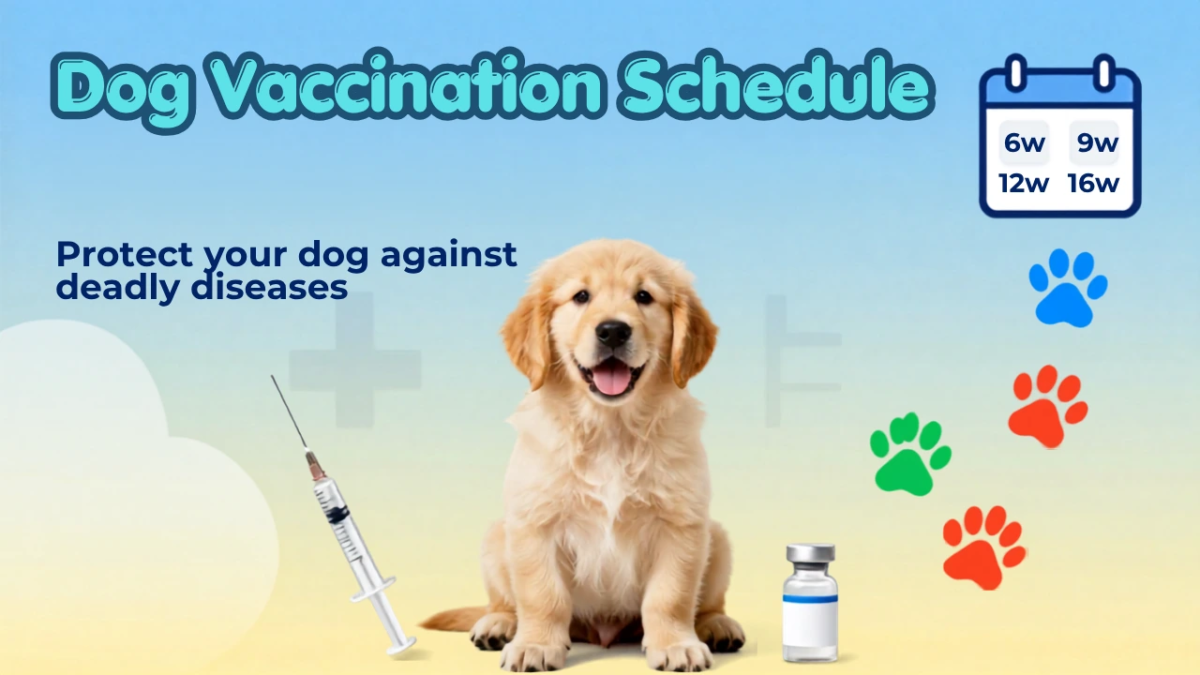
Like humans, dogs are also affected by deadly diseases and need protection from such diseases. Hence, one of the biggest responsibilities of pet ownership is following the right vaccination schedule in dog care. Vaccinations are not just about following a routine-they are about giving your dog the best possible start to a healthy, happy life.
In these articles, we will know the details about practical vaccination schedules, starting from the type of vaccines to the recommended protocol.
Table of Contents
Importance of vaccination
- Vaccines help a dog’s immune system recognize and fight off the harmful viruses and bacteria before they cause severe illness. By exposing the immune system to weakened or killed forms of these pathogens, the body learns to produce antibodies that can effectively protect your Dog from life-threatening diseases.
- Vaccination keeps the dog healthy, thereby increasing lifespan.
- Prevents expensive emergency treatments
- Some of these diseases, like rabies, can spread to humans as well, making vaccination important for public health too. Vaccination can prevent the transmission of such a disease so that your dog can safely interact with human beings.
- A vaccination certificate is often required during transportation, dog shows, and insurance for the dog
Without vaccines, dogs become vulnerable to diseases such as:
- Rabies-
- Canine distemper
- Parvovirus
- Hepatitis
- Leptospirosis
Some of these diseases can spread to humans as well, making vaccination important for public health too.
Diseases commonly protected by vaccinations.
Name of the disease | Causative agent | Why It’s Critical |
Canine Distemper (CD) | Canine Distemper virus | Highly contagious, often fatal respiratory and neurological disease |
Infectious Canine hepatitis(ICH) | Adeno virus | Causes liver damage and serious illness |
Canine parvovirus(CP) | Canine parvovirus | Extremely deadly gastro intestinal disease, especially in puppies |
Rabies | Rabies virus | Fatal disease.Can spread to human and other animals through bitting |
Leptospirosis | Leptospira bacteria | Cause severe kidney and liver disease. |
Kennel Cough | Bordetella | Highly contagious respiratory infections in dog |
Parainfluenza: | Influenza virus | Cause respiratory infection |
Understanding Core vs Non-Core Vaccines
Core vaccines are recommended for all dogs because they protect against severe and highly contagious diseases. These vaccines are considered essential regardless of breed or lifestyle.Non-Core Vaccines requirement depends on your dog’s environment, travel habits, and lifestyle,
Core Vaccines
- Canine Distemper
- Canine Parvovirus
- Canine Adenovirus (Hepatitis)
- Rabies
Non-Core Vaccines:
- .Leptospirosis (core in some regions)- Critical in dogs frequently exposed to domesticated and wild animals, rodents, contaminated water particularly in region having with high prevalence rate of Leptospira as per recommendation of your vet
- Kennel cough (Bordetella)- Required for dogs visiting kennels, grooming facilities, or dog shows.
- Lyme disease-Not prevalent in India. May not be administered,
- Canine influenza- Not prevalent in India. May not be administered.
- Canine Corona Virus- Very mild infection. Should not be included in routine vaccination
Practical vaccination schedule in dog
Depending on the age vaccination schedule in Dogs can categorised in to two stages
1-Puppy vaccination schedule.
2-Adult Dog vaccination schedule.
Puppy Vaccination Schedule
Puppies are highly vulnerable because their immune systems are still developing. Early vaccinations are extremely necessary during the first few months of life. The puppy shots schedule starts at six to eight weeks old, and you puppy needs to receive multiple doses of vaccines during this period.
Vaccine | Booster Frequency | My recommendation |
Leptospirosis | Annually | Give only if required in consultation with your Vet |
Bordetella | Annually | Give only if required in consultation with your Vet |
Canine Influenza | Annually | Not required in India |
Borrelia (Lyme) | Annually | Not required in India |
Age of the puppy | Name of the vaccines | Type of vaccinations | My recommendation |
6–8 weeks | DHPP (Distemper, Hepatitis, Parvovirus , Parainfluenza) | Primary | Start your vaccination when Your dog just completes 7 weeks |
10-12 weeks | DHPP (Distemper, Hepatitis, Parvovirus , Parainfluenza) | Booster | Vaccinate at 10 weeks. Add leptospirosis if required in consultation with your Vet |
12-14 weeks | DHPP (Distemper, Hepatitis, Parvovirus , Parainfluenza) | 2nd booster | Not required in many cases. Consider if your dog is of large Breed. If required give at 13 weeks |
14- 16 weeks | Rabies | Primary | Vaccinate at 16weeks |
If one booster schedule is followed for combined vaccines that Rabies vaccination can be done at 13 weeks
Adult dog Vaccination Schedule
After the initial puppy series, many vaccines provide adequate immunity when given every few years. Once your puppy series is complete, the vaccination schedule shifts to maintenance boosters:
Name of the vaccines | Type of vaccinations | Initial booster | Subsequent booster |
DHPP (Distemper, Hepatitis, Parvovirus , Parainfluenza) | Booster | Within 1 year of last puppy dose | Annually. As per new Recommendation repeat in 3 years |
Rabies | Booster | Within 1 year of initial dose | Annually |
Non-Core Vaccine Booster Schedule
Vaccine | Booster Frequency | My recommendation |
Leptospirosis | Annually | Give only if required in consultation with your Vet |
Bordetella | Annually | Give only if required in consultation with your Vet |
Canine Influenza | Annually | Not required in India |
Borrelia (Lyme) | Annually | Not required in India |
Vaccination Cost: Is It Expensive?
Many pet owners worry about vaccine costs, but prevention is far cheaper than emergency treatment. Saving a dog from one attack of Parvo viral infection may be as expensive as 10 times of one year vaccination cost
Name of the vaccine | Average cost range | Brand available |
Puppy Vaccine Series | ₹2,000–₹4,000 | Canigen DHPPi(Virbac) Nobivac DHPPi(Nobivac) K-5(Intas) |
Rabies Vaccine | ₹300–₹800 | Rabigen(Virbac) Nobivac-Rabies (Nobivac) |
Annual Boosters | ₹1,000–₹3,000 | Both vaccine |

Important Tips on Vaccinating Your Dog for good immunity.
- Always vaccinate your dog from a registered veterinary practicineer.
Canine vaccines need to be stored and transported with proper maintenance of cold chain. Such vaccine must be stored and transported in a temperature range of 2 to 8 degree centigrade starting from its manufacture point till it is injected to your dog. Any breach in maintenance of cold chain leads to loss of vaccine potency and will never protect your dog from disease. A veterinarian knows its importance and procures vaccines directly from manufacture which ensures proper maintenance of cold chain. Purchasing vaccines from chemist shop or Pet store may be risky as you can never be sure about the vaccine potency.
- Maintain a vaccination record system.
Always maintain record of deworming, vaccination given to your dog. You may maintain a digital record too in your smart phone. Use your smartphone’s calendar with reminders 2 weeks before each booster. Keep a physical copy in your dog’s medical folder. Take photos of vaccination certificates as backup Your vaccination record should contain
- Name of your Dog, sex, breed and date of birth,
- Name and contact number of your veterinarian,
- Date of each vaccination
- Vaccine type and manufacturer
- Next scheduled booster date
- Veterinarian signature on each vaccination
Normally your vet will provide a health card when you visit him for first vaccination of your dog. Always keep the card ready and carry with you whenever you visit a vet clinic even if not for vaccine. Many times, vet ask for verification of such record before diagnosing an ailment of your dog. It is also a crucial document while availing Boarding facilities for your dog, travelling with your dog, Licensing, Emergencies
- Avoid Puppy from Public Exposure Before Full Vaccination
Never expose your puppy to public places. Outdoor environment ,other dogs until puppy series vaccination is completed. Pup may catch the disease even during vaccination and equally be dangerous as for unvaccinated dog.
- Never miss the booster doases
Vaccines lose effectiveness over time. Delayed boosters can leave your dog vulnerable again.
Set reminders on your phone or calendar and never miss the scheduled vaccination date. Missing a schedule up to 7 to 10 days may not cause any problem.
- Never Over vaccinate your Dog Without Veterinary Advice
Some owners vaccinate too frequently believing “more is better.” Unnecessary vaccinations may increase adverse reactions, adversely affect dog immune system. and may be harmful for your dog’s health. Always follow veterinarian recommendations.
- Always deworm your dog before vaccination.
Deworming your dog at least one week before vaccination helps in better immune response and produce sufficient antibody thereby better outcome of vaccination.
- Avoid vaccination in pregnant and lactating bitch.
Vaccinating pregnant or lactating dogs should be avoided as immune response of such dog to vaccines is thought to be compromised. So better to wait after pregnancy or lactation period is over
- Keep your dog stress free after vaccination
Avoid travelling, taking your dog to outside, expose to bad weather and other dog to keep it stress-free
Does vaccine cause side effect?
Most dogs experience no serious problems after vaccination. Mild reactions are normal and temporary, which may include
- Mild fever
- Sleepiness
- Reduced appetite
- Slight swelling near injection site
These usually disappear within 24–48 hours. Serious reactions are extremely rare but consult your veterinarian immediately if you notice:
- Difficulty breathing
- Severe vomiting
- Facial swelling
- Collapse
- Persistent diarrhea
Frequently Asked Questions
At what age should puppy vaccination start?
Puppies usually begin vaccinations between 6–8 weeks of age.
Why pups are vaccinated at 6 to 8 weeks and not before
Mothers milk contains maternal antibodies. Puppies receive temporary immunity from their mother’s milk, but these antibodies gradually start declining from 6 to 8 weeks. Vaccinating pup before 6 weeks protected with maternal antibodies will result in neutralisation of the vaccine viruses with the antibodies leading to breach in immunity.
.
If I adopt a older puppy or adult dog and not sure about the vaccination history.How I can vaccinate.
For Puppy less than 16 weeks, it is recommended to administer 3 doses of combined vaccine and 1 dose of rabies vaccine 3 to 4 weeks apart. For dogs beyond 16 weeks, 3 doses of combined vaccine and 1 dose of rabies vaccine 3 to 4 weeks apart. Follow annual booster vaccination schedule after one year of last vaccination.
Can vaccinated dogs still get sick?
Vaccines greatly reduce risk but do not guarantee 100% immunity. However, vaccinated dogs generally experience milder illness.
Can I bathe my dog after vaccination?
It is usually better to wait 2–3 days after vaccination before bathing, especially for puppies.
What happens if I miss a vaccine booster?
Not much harm if you missed booster date by a week or so. Beyond that it is better to consult your veterinarian immediately. Some vaccines may require restarting the schedule.
II have fully vaccinated my dog. Still, it got parvo. Why?
Degree of protection offered by a vaccine largely depends on its quality and cold chain maintenance. A good quality vaccine properly maintained under recommended temperature rarely fails. In your case it might be poor cold chain maintenance.
.
Conclusion
Following the right vaccination schedule in dog care is one of the most responsible decisions a pet owner can make. Vaccines protect dogs from deadly diseases, reduce long-term medical expenses, and help ensure a healthier life. Whether you own a playful puppy or a senior companion, staying consistent with vaccinations is essential. Prevention always costs less than treatment—financially and emotionally.
A healthy dog is not just happier; it also gives families peace of mind.
Share your Dogs vaccination story here. If you have any query, please feel free to post it here.