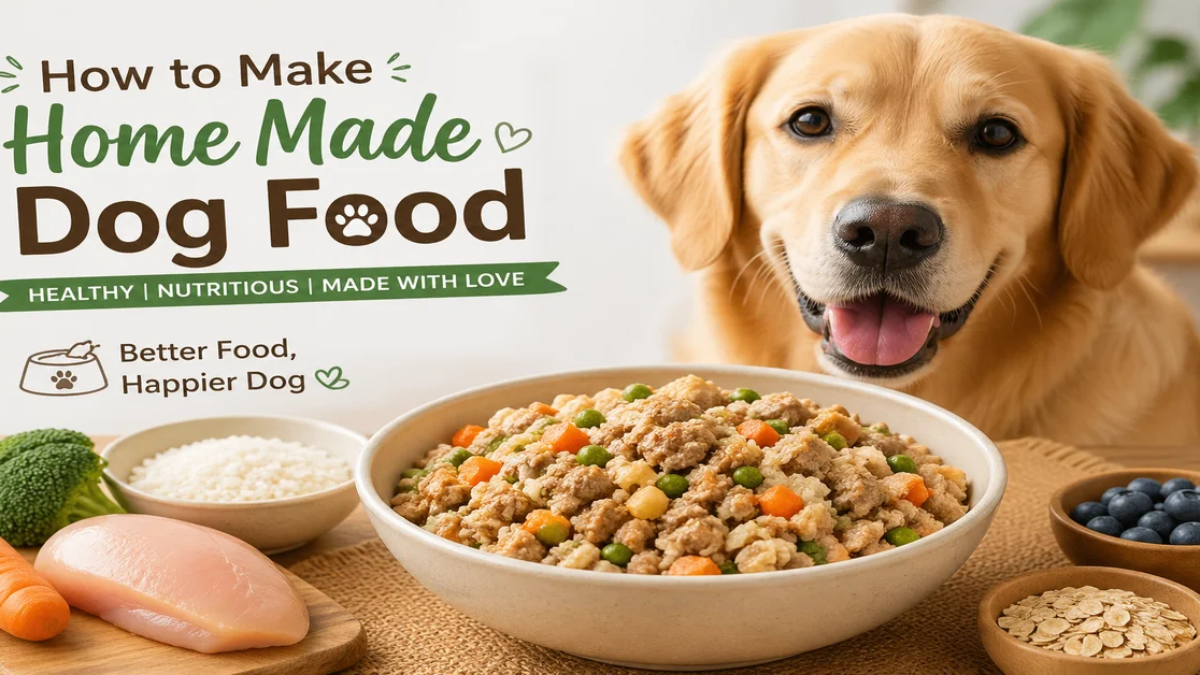
Home-made Food for Dogs: A Complete Guide for Healthy Homemade Nutrition
Home-made Food for Dogs: A Complete Guide for Healthy Homemade Nutrition
Home-made Food for Dogs: A Complete Guide for Healthy Homemade Nutrition
Home-made Food for Dogs: A Complete Guide for Healthy Homemade Nutrition
-
Dr JM Panda Dr Jatindra M Panda
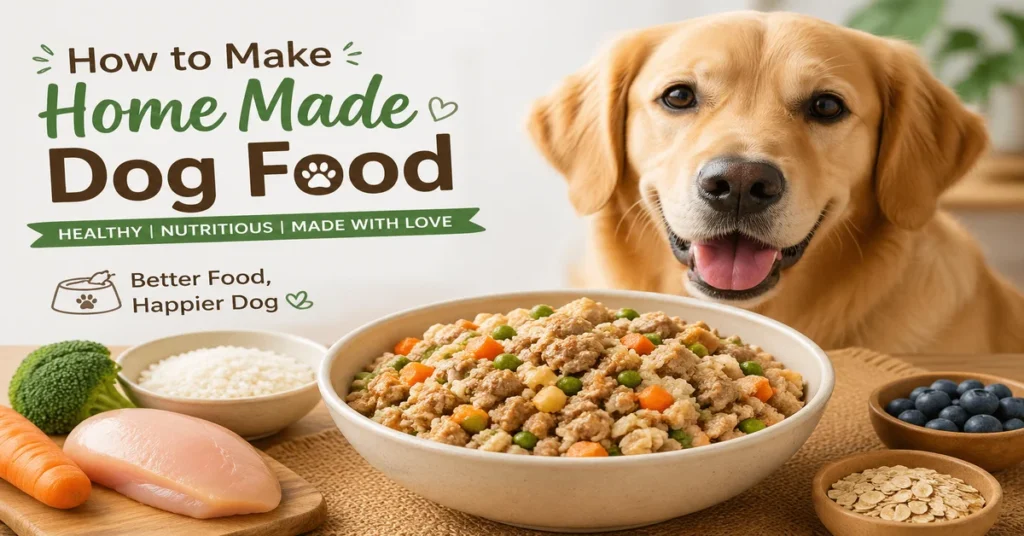
Nutrition plays an important role in maintaining optimum health, growth and wellbeing of humans as well as animals. Providing balanced nutrition to a dog is an important responsibility of every pet parent. With the increasing trend and expanding commercial pet food market, the significance of homemade dog food can never be overemphasised.
Dogs are particularly more sensitive to the food as compared to the human being. Many food items like Milk, grapes, which are considered safe and nutritious for human may cause allergy, health issues, or even death in dogs. Of course, there is individual variation among dogs. During my clinical practice over the last two decades, I have seen many dogs developing skin rashes, digestive upsets after a few days to months of feeding milk, chapatti, etc. While other dogs of the same breed are doing well with milk, roti, etc., for years together without developing any health issues.
So, as a pet parent, you must have adequate knowledge of feeding your dog. In this guide, you’ll learn everything about preparing safe, healthy, and balanced homemade food for your furry friend at home.
Table of Contents
Five Benefits of home-made food
1-Better control over the freshness and quality of food ingredients
About 65% of Indian pet owners prefer homemade meals to ensure ingredient quality and avoid preservatives. You can choose locally available food ingredients used for human beings that provide both freshness and quality.
2-Costomised nutrition
Nutrient requirements vary depending on the different life stages of your dog. While a puppy requires more protein, a senior dog requires easily digestible food ingredients. Similarly, depending on age, activity level, and type of breed, the nutrient requirement can be met by customising the diet.
3-Managing health issues like an allergy
Dogs are particularly more sensitive to the food they are eating. By preparing your dog’s meal, you can figure out any ingredient that may cause an allergy or health issue.
If you detect a sudden digestive upset after feeding any new food, you can easily withdraw that item, preventing further harm to your pet.
4-Managing a specific health condition
- When your dog becomes sick, its nutrition is the first to be affected. The dog may not eat due to a depressed appetite. A diet prepared from food ingredients generally preferred by your dog can be made to improve food intake.
- You need to feed a tailor-made diet to your dog that has just recovered from a disease like parvo, CD, etc.
- Dogs suffering from chronic ailments like kidney disease, liver failure, dermatitis etc needs specific diet which can only be made from home base ingredient.
5-Budget friendly
With the increasing cost of commercial pet food, maintaining a dog, particularly a large breed dog, with canned food, is too expensive. By adopting home base diet, you can reduce your dog food expenses by up to 30% compared to premium commercial diets. For families managing household budgets, that’s a significant difference that doesn’t compromise their dog’s nutrition.
Nutrient requirement and common food ingredients for dogs
Sl No | Type | Function | Common available source |
1 | Carbohydrates
| Provide energy for cells, tissues and organs required for day-to-day activities. | White rice, Sweet potatoes, oats, Roti, Patatoes, bread,bazra, millet, multigrain dalia |
2 | Protein | Growth and development, building, repairing and maintenance of tissue | Non-veg-Boneless chicken, Moong dal, deboned fish, eggs, Veg-Dal(moong/masoor/Channa) Milk, lentils,soyabean, Paneer curd |
3 | Fat | Long-term energy storage, insulating body, protecting vital organs | Coconut oil, olive oil, linseed oil, Soyabean oil |
4 | Fibre | Support digestive health by feeding beneficial gut microbes. |
Vegetables: Pumpkin, papaya, ladies finger, cauliflower, green Bean, carrots, Peas, bottle guard,
Fruits- Banana, apple, etc Green Leafy Vegetable- spinach(palak)
|
5 | Vitamins and minerals | Regulate metabolism, support immune function, build tissues(bone, teeth) | |
6 | Water | Regulate body temperature, lubricate joints, protect tissues and organs, transportation of nutrient and oxygen | Drinking water, water available in food. |
Proportion is the key.
The usual dry feed should contain protein 22 to 24%, fat 3 to 4% and fibre 4 to 6%. The level may be modified by varying amounts of low-grade proteins.
Sl no | Age of the dog | Carbohydrate-rich food | Protein-rich food | Fruits and vegetables |
1 | 0-1/1.5 yrs | 60 | 20 | 20 |
2 | 1-5 Yrs | 50 | 25 | 25 |
3 | 5years and above | 40 | 25 | 35 |
How much to feed
Sl no | Type of breed | Example | Quantity to be fed as a percentage of body weight |
1 | Toy breed | Spitz, Pomeranian, pug | 5% |
2 | Small breed | Poodle, dachshund | 4% |
3 | Medium breed | Beagle, bulldog, dalmatian, Siberian husky | 3% |
4 | Large breed | German Shepherd, Labrador, Great Dane | 2% |
5 | Giant breed | Saint Bernard, English mastiff | 1.5% |
· The quantity of food depends on the age, body weight and activity level of your dog. With an increase in these parameters, the requirement for food also increases.
· A less active dog (confined to home premises) requires 10% less than the recommended level. Normal active dogs (kept at home and taken outside for exercise) require 10% more, and working dogs (guard dogs, police dogs) require 20% more than the normal recommended level.
· For a puppy, double the quantities of the recommended level are required
A usual house dog weighing 5 to 7 kg needs about 150–200 gm of dry feed
Simple homemade food recipe for dogs
Vegetarian recipe

Recipe | Ingredients | Preparation |
Patato+Dal+Veg | · Moong dal (cooked)-1 cup · Medium sweet potato (boiled)-1 pc · Vegetables (beans, carrot, spinach, papaya, etc.)- 1 cup · Leenseed oil-1/4 Tsf
| · Cook moong dal with a little haldi until soft · Boil the sweet potato and mash it · Vegetables to be steamed · Leenseed oil-1/4 Tsf · Mix all and feed
|
Rice+ Dal+ Veg | · White rice (cooked)-2 cups · Moong dal (cooked)-1 cup · Vegetables( beans,carrot spinach,pappaya etc- 1 cup · Cooked soyabean-1/4 cu | · Cook moong dal and rice with a little haldi until soft · Cook Soyabean · Vegetables to be steamed · Mix all and feed |
Non veg recipe

Receipe | Ingredients | Preparation |
Rice+ Chicken +Veg | · Cooked white rice-2 Cups · Boiled chicken (shredded, bones removed-1 Cup · Vegetables(beans,carrot spinach,pappaya etc-1 cup · Coconut oil-1 Tablespoon
| · Cook white rice and chicken separately. · Moong dal with a little haldi until soft · Vegetables to be steamed · Add Coconut oil-1 Tablespoon · Mix all and feed
|
Oat+ Egg+ Veg
| · Oats (cooked)-1/2 cups · Whole egg (boiled)-3 pcs · Vegetables( beans,carrot spinach,pappaya etc-1 cup · Olive Oil-1 tablespoon | · Cook oats with a little haldi until soft · Boil 3 eggs · Vegetables to be steamed · Add Olive oil-1 Tablespoon · Mix all and feed
|
Storage Tips
- Store the prepared dog food in airtight containers and keep it in the refrigerator for up to two hours of cooking, which can be used for three days without spoiling.
- If possible, prepare large batches of individual ingredients and keep them in freeze. Frozen homemade dog food maintains quality for up to three months when properly stored in freezer-safe containers.
- Keep the frozen food in the refrigerator overnight instead of keeping in room temperature.
- Slightly warm the food as per the preference of the dog and serve it.
How to make home-based treats.
- Take 4-5 apples and remove the skin. Cut into small pieces and steam it. See that the hardness is not lost.
- Keep in an air-tight container and store in freeze.
- Whenever necessary (as during training), take it out of the freezer. Keep at room temperature for 30 minutes and feed.
Food to avoid
- Avoid wheat preparations like Roti, milk and milk substitutes if it creates skin allergy.
- Onions, garlic, chocolate, grapes, and most whole spices can cause serious health problems in dogs.
- Onions and garlic contain compounds that damage red blood cells in dogs, causing anaemia. Even small amounts accumulated over time create a significant health risk.
- Grapes and raisins can cause kidney failure in dogs. Chocolate contains theobromine, which cannot be metabolised easily by a dog’s liver. Whole spices like cloves and nutmeg can cause gastric irritation in a dog.
- Never use artificial sweeteners, particularly xylitol found in some peanut butters, etc.
- Feeding tips
- Feed your dog at regular times and do not give titbits between meals. Feed your dogs two meals a day. The last feed should be given well before bedtime.
- When home-made food is fed to your dog, the addition of multi vitamins and mineral combination readily available in the market is a good idea.
- Regular feeding of probiotics, such as curd, is beneficial for the gut health of your dog.
- Food served should neither be too hot nor too cold and should be served at room temperature.
- Do not overfeed your pet; if it is overfed, this can result in loose motions.
- Provide fresh, clean drinking water at all times.
- There should not be any abrupt change in the diet plan ever. This may cause indigestion.
Frequently Asked Questions
Can a dog be maintained on a purely vegetarian diet?
Yes, a dog can be maintained on a purely vegetarian diet, provided the requirements of calcium, essential vitamins and minerals are taken care of. Infact dogs live longer on a vegetarian-based diet.
Can a dog be maintained solely on home-made food?
In my view, homemade food having the right quantity of protein, vitamins, minerals, and fibres, along with supplements containing calcium, multivitamins and minerals, is the best approach.
Should I give milk regularly to my dog?
Some dogs are allergic to milk protein called casein and develop skin rashes. While other dogs, even of the same breed, tolerate milk very well. The best approach is to start feeding milk at the puppy stage and see if any allergy develops or not. If nothing happens, milk can be safely given throughout life. In all cases of allergy, milk should be avoided. Once an allergy starts, milk should not be given throughout life
- Can I give wheat product to my dog?
Some dogs are allergic to a substance called gluten present in wheat, which causes a skin allergy. The approach should be like milk. Try in puppy stage and continue if no allergy develops.
Commercial dog food vs homemade food, which is better?
Commercial pet foods are well-balanced with vital nutrients, and as per the requirements of the breed, age and life stage. Food eaten by dogs can be measured and is easy to feed. On the other hand, Home-made diets are cheap and can provide complete nutrition, but making sure your pet gets the right mix of protein, fats, minerals and vitamins. In my opinion, commercial food should be started as early as and soon after weaning(separation from mother) and continue up to at least one year. This ensures the complete nutrition required for the proper growth and development of the puppy. After one year, the diet should be gradually shifted to home-based food.
If I choose commercial food, is it necessary to add additional supplements?
Commercial pet foods are well-balanced with vital nutrients, and as per the requirements of the breed, age and life stage. Food eaten by dogs can be measured and is easy to feed. On the other hand, Home-made diets are cheap and can provide complete nutrition, but making sure your pet gets the right mix of protein, fats, minerals and vitamins. In my opinion, commercial food should be started as early as and soon after weaning(separation from mother) and continue up to at least one year. This ensures the complete nutrition required for the proper growth and development of the puppy. After one year, the diet should be gradually shifted to home-based food.
Should I add salt to my dog home made food?
Unlike human dog require minimal sodium. However, if a dog is maintained on a purely vegetarian diet, a little bit of salt addition is beneficial. Whenever a dog is fed with potassium-rich food like potatoes, it is better to add salt to prevent losses of potassium
Conclusion
Home-based food, if properly balanced with protein, carbohydrates, and vitamins, can significantly improve your dog’s health and happiness. Additionally, fresh, nutritious and delicious meals prepared at home will strengthen the bond of belongingness between dog and family members, making your pet parenting journey even more joyful.